For Singapore logistics and packaging company WM, EPE foam recycling had become more than an environmental consideration. Large volumes of lightweight EPE and EPS packaging foam were occupying warehouse and temporary waste storage space, while the material’s low density made transportation inefficient. Without an economical way to reduce foam volume, much of the waste had previously been sent to landfill. WM therefore needed a practical solution that could reduce bulky foam at the source, lower handling pressure, and create better conditions for recycling.
Testing Real Waste Before Making a Purchase
Before selecting equipment, WM compared multiple foam recycling equipment suppliers. Because EPE foam recycling depends on actual material behavior, the team focused on processing performance, equipment stability, and long-term operating costs rather than brochures alone. To verify these factors, WM visited GREENMAX’s manufacturing base in China and brought its own foam materials for on-site testing.
The testing process was especially important because EPE has different physical characteristics from rigid EPS. EPE is flexible and tends to rebound after compression, so effective EPE foam compression depends not only on pressure, but also on whether the compressed material remains stable for storage and transportation.
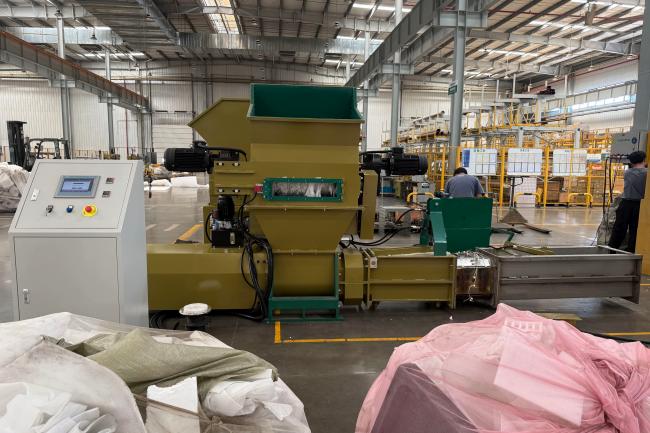
After evaluating WM’s waste stream, GREENMAX recommended the ZEUS Z-C200. During the trial, the waste foam was processed and mechanically compressed into denser, more manageable blocks. The test showed that foam volume could be reduced by approximately 50 times. For WM, testing its own materials made the result far more meaningful than relying on theoretical figures alone.
Reducing the Cost of “Transporting Air”
The biggest logistical problem with loose packaging foam is its extremely low bulk density. A truck or storage area can look full even though the actual weight of plastic is relatively small. In practice, companies often pay to store and transport the air trapped inside the foam structure.
By introducing the Z-C200 foam compactor, WM turned loose foam into compact blocks that required far less space. The higher-density material could be stacked more efficiently, helping reduce pressure on warehouse areas and improve the effective load of each shipment. Longer intervals between waste collections also became possible because more material could be stored within the same footprint.
This change improved the economics of EPE foam recycling and broader polyethylene foam recycling. GREENMAX also provides an EPE recycling solution for businesses handling bulky polyethylene foam waste. When bulky material is reduced at the source, transport becomes more practical and the waste is easier to consolidate for downstream recycling. For logistics, packaging, and manufacturing companies, this can determine whether low-density foam moves from a disposal stream into a recyclable material stream.
Moving from Landfill Toward Recycling
Before the project, EPE foam recycling was constrained because loose foam was difficult and expensive to transport, so WM’s waste was mainly handled through landfill disposal. After volume reduction, the material became easier to store, handle, and move over longer distances.
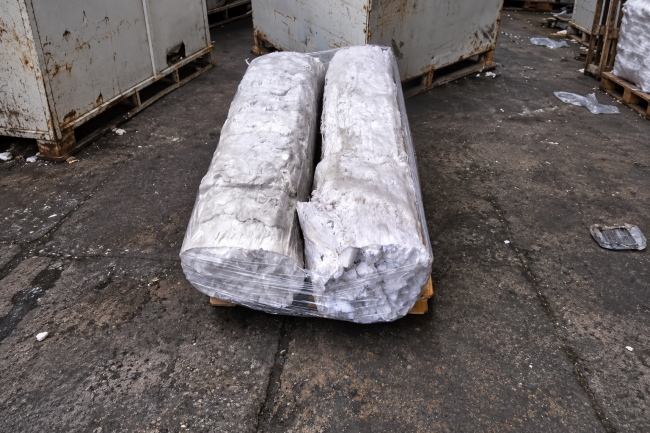
The compacted foam can then enter downstream recycling instead of being treated only as waste. Through the recycling and regeneration network connected with GREENMAX’s parent company, suitable foam material can be processed into recycled plastic raw material and used again in products such as decorative mouldings and frames.
For WM, the value of the project was therefore not limited to a 50:1 volume reduction. The more important change was creating a practical route away from landfill. By making the waste denser and more transportable, the company improved the conditions required for EPE foam recycling and broader resource recovery.
Why On-Site Material Testing Matters
Foam waste can vary significantly in density, size, flexibility, and condition. A machine that performs well with one material may require a different configuration for another. This is why WM’s decision to test its actual waste before purchase was an important part of the project.
The team could directly observe feeding performance, block stability, compression results, and continuous operation. This gave WM a clearer basis for evaluating whether the system matched its real operating environment. Following the factory visit and trial, WM confirmed its purchase of the GREENMAX ZEUS Z-C200.
A Practical Model for High-Volume Foam Waste Generators
WM’s experience shows that companies generating EPE and EPS packaging waste should evaluate more than equipment price alone. Storage costs, collection frequency, transportation efficiency, landfill fees, material type, and the potential value of recovered foam all affect the return on a recycling project.
For businesses facing similar challenges, EPE foam compression can be the first step in changing the economics of foam waste. Once lightweight material is converted into compact, transportable blocks, EPE foam recycling becomes more practical and can connect on-site waste management with downstream polyethylene foam recycling. In WM’s case, that shift helped transform bulky packaging foam from a disposal burden into a material with a realistic path back into the recycling loop.